

Blog
Lens Mount Types Explained: Camera & Lens Compatibility Guide

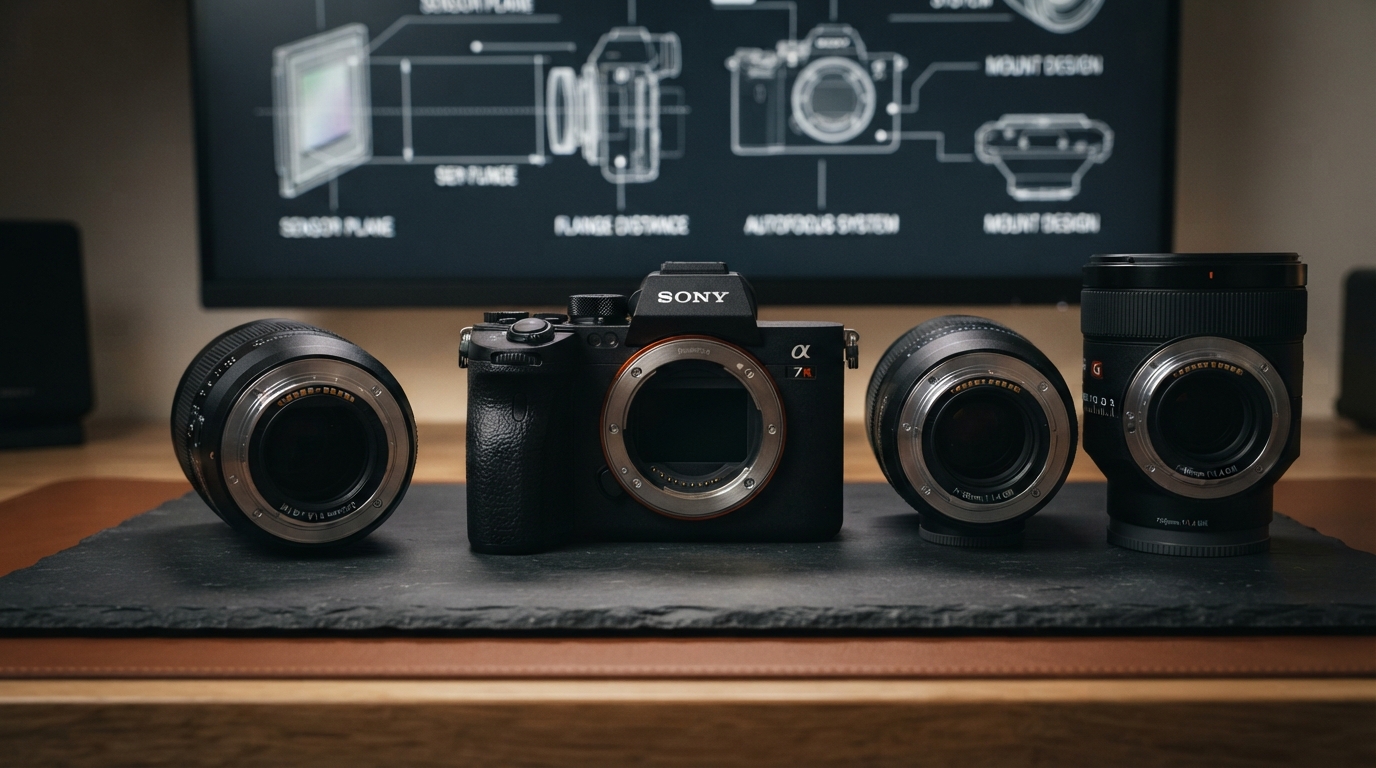
Buying a lens that physically will not lock onto your camera body is one of the most frustrating mistakes you can make. Every camera manufacturer uses a specific opening and locking mechanism—called a lens mount—to connect optics to camera sensors.
If you are upgrading your camera body, moving from a DSLR to mirrorless, or adding a prime lens to your kit, here is the quick compatibility breakdown across major brands:
Lens Mount Compatibility at a Glance
| Brand | Mount Name | Camera Types | Fits These Lens Types | Adaptable to Mirrorless? |
| Sony | Sony E-Mount | Mirrorless (A6000 series, A7 series, FX series) | Sony E (APS-C) & FE (Full-Frame) | Native Mirrorless |
| Canon | Canon RF Mount | Mirrorless (EOS R series) | RF (Full-Frame) & RF-S (APS-C) | Native Mirrorless |
| Canon | Canon EF / EF-S | Legacy DSLRs (Rebel, 5D, 80D series) | EF (Full-Frame) & EF-S (APS-C) | Yes (via EF-EOS R Adapter) |
| Nikon | Nikon Z-Mount | Mirrorless (Z50, Z5, Z6, Z8, Z9) | NIKKOR Z (Full-Frame & DX) | Native Mirrorless |
| Nikon | Nikon F-Mount | Legacy DSLRs (D3500, D5600, D750, D850) | NIKKOR F (FX & DX) | Yes (via FTZ II Adapter) |
| Fujifilm | Fujifilm X-Mount | Mirrorless (X-T, X-PRO, X-E series) | Fujinon XF & XC (APS-C) | Native Mirrorless |
| Leica | Leica M-Mount | Rangefinders & Mirrorless (M series) | Leica M & Manual Primes | Native Rangefinder / Highly Adaptable |
Check our full camera lenses collection to verify live stock and pricing for your specific mount system.
Quick Reference: Which Mount Does Your Camera Use?
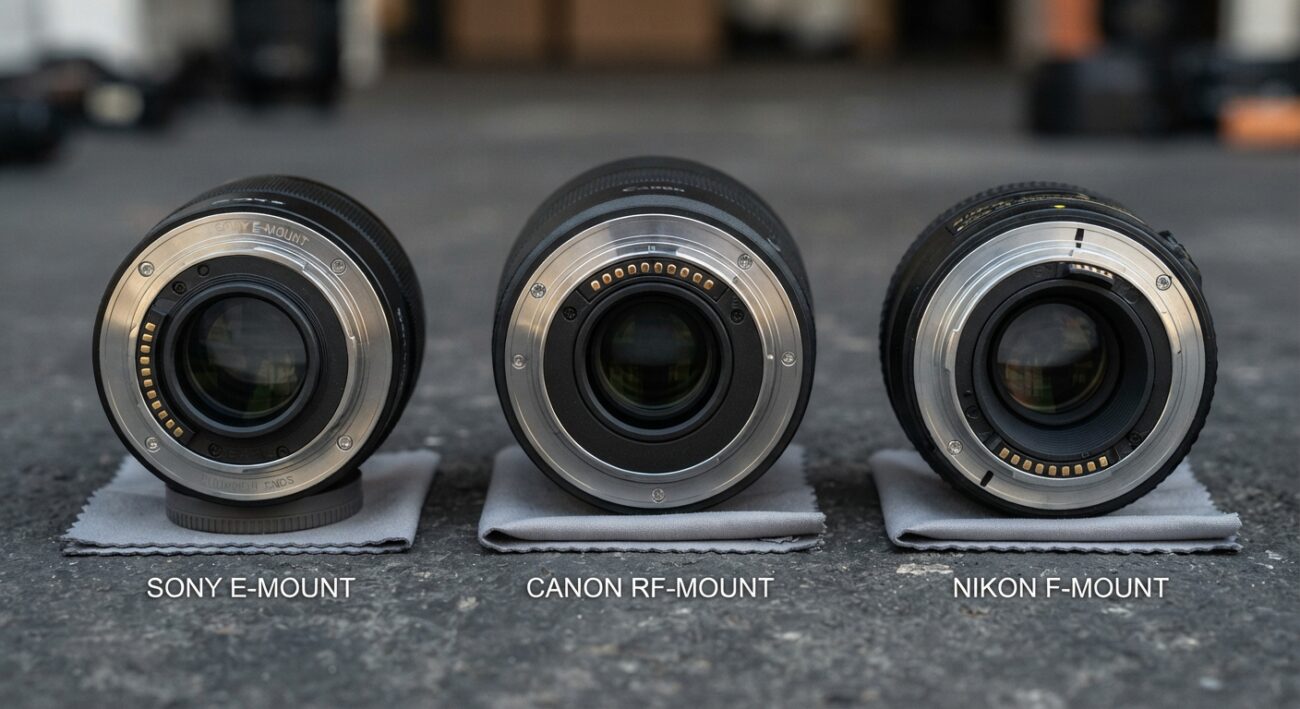
A lens mount consists of two parts: the metal bayonet ring on your camera body and the matching tabs on the rear of the lens. These rings hold the lens in place at an exact distance from the sensor (known as flange focal distance) and pass autofocus, aperture, and stabilization data back and forth through electronic gold pins.
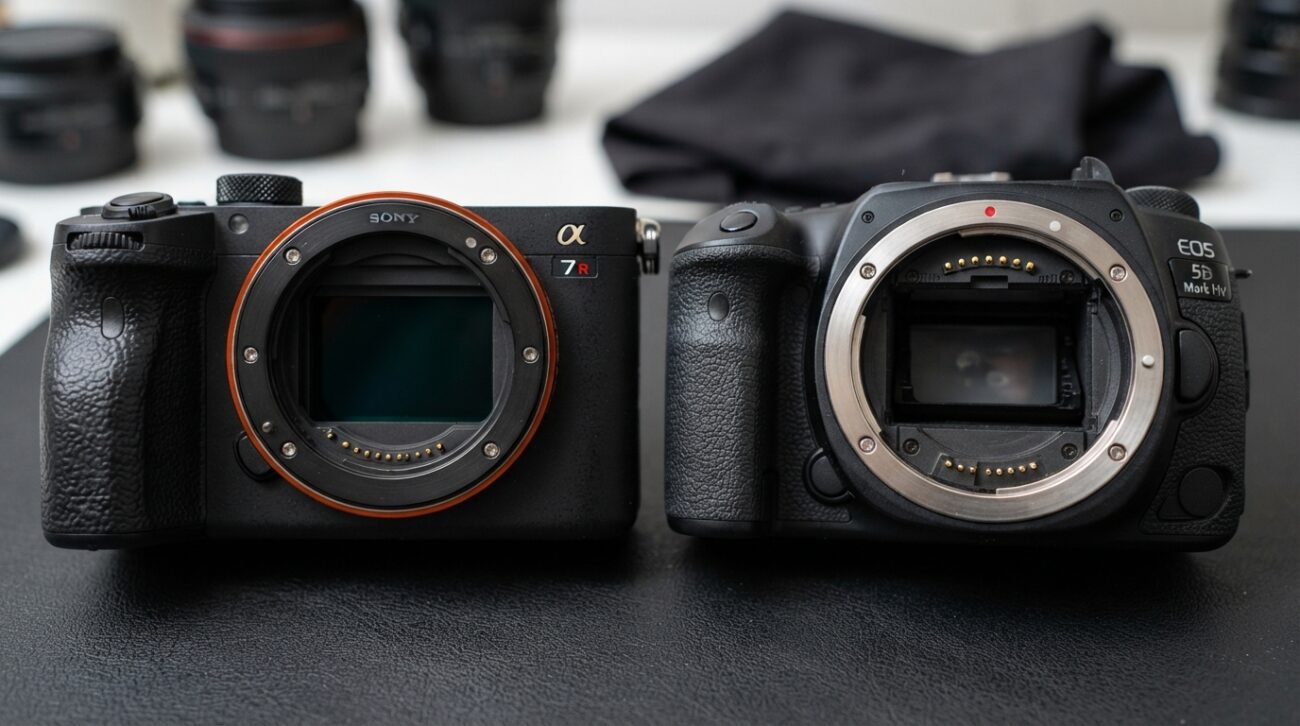
Canon Lens Mount Types: EF vs RF (and APS-C Variants)
Navigating canon lens mount types comes down to understanding the transition from legacy DSLRs to modern mirrorless EOS R cameras.
Canon EF and EF-S Mounts (DSLR)
For decades, Canon DSLRs used the EF mount for full-frame cameras and EF-S for crop-sensor (APS-C) models.
Full-frame EF lenses fit on every Canon DSLR ever made.
Crop EF-S lenses only fit on APS-C DSLR bodies (like the Rebel series or 80D). They physically extend further into the camera body and will damage a full-frame DSLR if forced.
Canon RF and RF-S Mounts (Mirrorless)
Modern Canon EOS R cameras use the wide RF mount.
Native RF lenses feature a shorter back-focus distance and faster communication channels than older EF glass.
You cannot mount an RF lens on an older EF DSLR body—it is physically impossible.
However, you can mount any legacy EF DSLR lens onto a modern RF camera using Canon’s official EF-EOS R Mount Adapter without any loss in autofocus speed or image quality.
Nikon Lens Mount Types: F-Mount vs Z-Mount
Understanding nikon lens mount types requires separating 60 years of SLR mechanical design from modern mirrorless glass.
Nikon F-Mount (DSLR)
Nikon used the classic F-mount on DSLRs from 1959 through the DSLR era. It uses a narrow bayonet ring and a mechanical aperture lever on legacy models.
FX lenses cover full-frame sensors.
DX lenses are designed for smaller crop-sensor DSLRs (like the D3000 and D5000 series).
Nikon Z-Mount (Mirrorless)
Nikon created the Z-mount for its mirrorless lineup (such as the Z5, Z6, and Z8). It features the widest inner throat diameter of any full-frame mirrorless system.
NIKKOR Z lenses deliver edge-to-edge optical sharpness thanks to the extremely short distance between the rear lens element and the sensor.
To use legacy Nikon F-mount lenses on a new Z-series body, you need the Nikon FTZ II Adapter.
Sony E-Mount & Sony A6000 Lens Mount Type
If you are searching for the sony a6000 lens mount type, the answer is straightforward: the A6000 uses the Sony E-mount.
Sony simplified mirrorless mounting by keeping a single physical bayonet shape across both crop-sensor and full-frame mirrorless cameras. However, Sony divides its E-mount lenses into two optical designations:
E Lenses (APS-C): Designed specifically for crop-sensor bodies like the Sony A6000, A6400, A6700, and ZV-E10.
FE Lenses (Full-Frame): Designed for full-frame mirrorless bodies like the A7 III, A7 IV, and A9.
Mixing Sony E and FE Lenses
Because the physical mount is identical, you can cross-mount these optics:
Mounting an FE full-frame lens on an A6000: Works natively with full autofocus and image quality. The crop sensor simply uses the sweet spot in the center of the lens.
Mounting an E crop-sensor lens on a full-frame A7 body: The camera automatically detects the crop lens and switches into "APS-C Crop Mode," lowering your overall megapixel output to prevent dark corners (vignetting).
Other Key Mount Systems We Stock: Fujifilm X & Leica M
Beyond Canon, Nikon, and Sony, our inventory includes two specialized, highly respected mount systems:
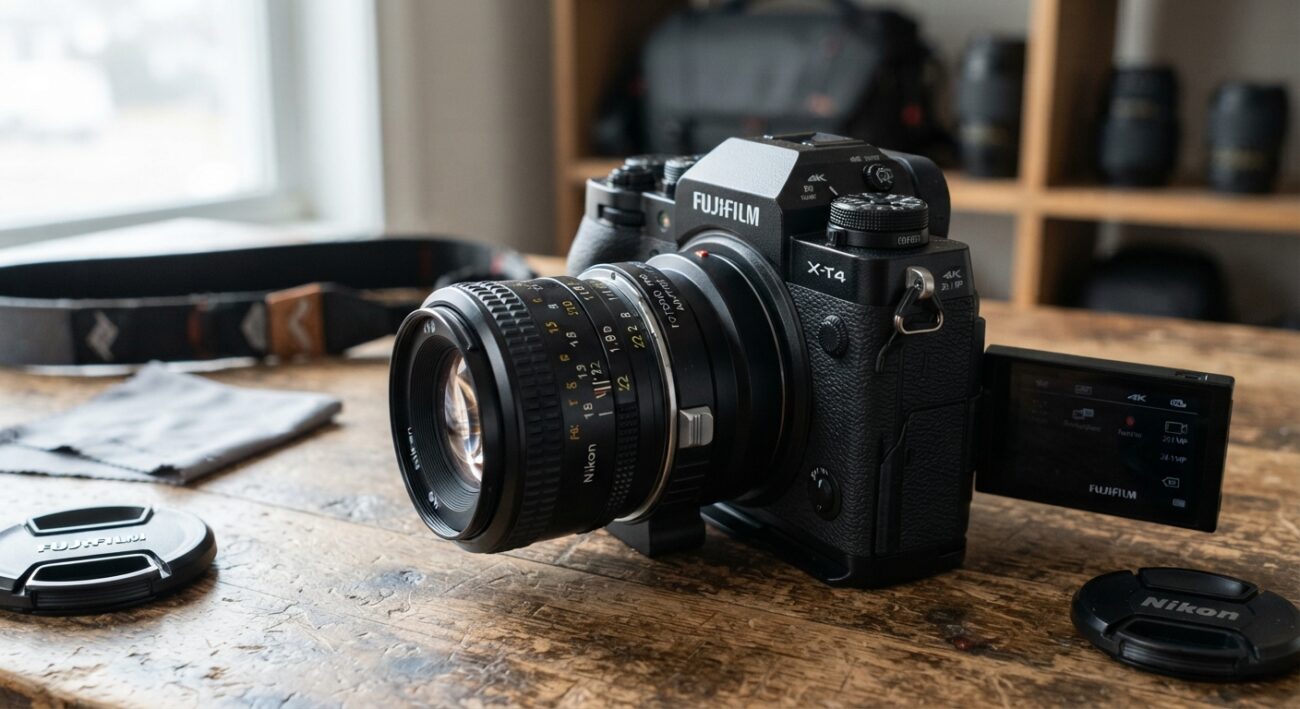
Fujifilm X-Mount
Fujifilm designed the X-Mount specifically around crop-sensor (APS-C) mirrorless bodies like the X-T4, X-T5, and X-PRO series. Because Fuji focuses almost entirely on APS-C optics, their XF and XC lenses are light, compact, and optimized for crop sensors without requiring full-frame cross-compatibility trade-offs.
Leica M-Mount
The Leica M-mount is a classic rangefinder mount introduced in 1954. It relies on precise manual focus mechanisms and manual mechanical aperture rings. Because of its short flange distance and lack of complex autofocus wiring, Leica M lenses are widely adapted across Sony, Nikon, and Canon mirrorless bodies using mechanical adapter rings.
Adapting Lenses Across Mounts: What Works and What to Avoid
Lens mount adapters allow you to attach optics built for one camera system onto another. Here is what you should keep in mind before relying on adapters:
Safe & Easy Adapter Combinations
DSLR Lenses to Mirrorless Cameras (Same Brand): Adapting Canon EF to Canon RF, or Nikon F to Nikon Z, works reliably. First-party adapters retain full autofocus tracking, eye-AF, exposure data, and image stabilization.
Manual Vintage Glass to Mirrorless: Using simple mechanical rings to mount legacy Leica M or vintage SLR glass onto Sony, Fuji, or Nikon mirrorless bodies works well if you enjoy manual focus.
Combinations to Avoid
Mirrorless Lenses to DSLR Bodies: You cannot adapt a Sony FE, Canon RF, or Nikon Z lens onto an older DSLR body. The mirror box inside a DSLR physically prevents mirrorless optics from focusing to infinity.
Cross-Brand Autofocus Adapters: While third-party adapters exist to convert Canon EF glass to Sony E-mount, autofocus speed and video tracking consistency are rarely as fast or reliable as using native glass.
Frequently Asked Questions
Can you put an EF lens on an RF mount?
Yes, you can use any Canon EF or EF-S DSLR lens on a Canon RF mirrorless camera body by using the official Canon EF-EOS R Mount Adapter. Autofocus and image stabilization perform natively.
Are all camera lens mounts the same?
No. Every camera manufacturer uses proprietary lens mount dimensions, electronic contact configurations, and flange focal distances. You cannot directly mount a lens from one brand onto another without a compatible adapter.
What lens mount does the Sony A6000 use?
The Sony A6000 uses the Sony E-mount. It supports both Sony E (APS-C crop) and Sony FE (full-frame) lenses natively without needing an adapter.


 Film & Home Development
One thought on “Lens Mount Types Explained: Camera & Lens Compatibility Guide”