What counts as “wide” for landscape
Roughly 14 to 24mm on full frame. Go wider than 14mm and the edges stretch. Stay at 24mm and you are into standard-zoom territory, which most people already own.
Two things matter more for landscape than for most lenses:
- Corner sharpness at f/8 to f/11. You will be stopped down on a tripod, so the maximum aperture matters less than how the edges look.
- Whether you can use filters. A polarizer or ND filter changes a sky and water shot more than any lens upgrade. A lens with a bulging front element makes that harder.
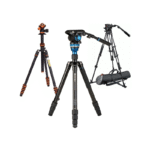
A tripod helps more than people expect. We carry the SmallRig AP-02 travel tripod at $139 and the TRIBEX SE hydraulic tripod at $399.
Best wide angle lens for full frame
If you shoot a full-frame body, the two zooms below are the choices.
Nikon Z 14-30mm f/4 S: $1,049
The Nikon Z 14-30mm f/4 S is our pick for most landscape shooters. It goes to 14mm, which is wider than the Sony, and it takes 82mm screw-on filters. That is rare for a lens this wide, and it is the main reason to pick it for landscape.
It is a constant f/4, so you give up two-thirds of a stop of light against the Sony. For tripod landscapes that rarely matters. If you shoot at night, it does.
Who it suits: Nikon Z users shooting landscapes, hiking and travel, especially with a polarizer.
Who should skip it: Anyone who wants f/2.8 for stars or dim interiors.
If you need a body, we also stock the Nikon Z f at $1,400.
Sony FE 16-35mm f/2.8 GM II: $2,649
The Sony FE 16-35mm f/2.8 GM II holds f/2.8 across the whole zoom range, weighs 547g (19.3 oz) and focuses as close as 22cm. It is the lens for people who shoot wide landscapes, then switch to astro, interiors or events without changing glass.
It starts at 16mm, not 14mm, so the Nikon gets a little more into the frame. And it costs $1,600 more than the Nikon. If you shoot mostly daytime landscapes on a tripod, that extra money buys speed you won’t use.
Who it suits: Working pros, and enthusiasts who also shoot astro or low light.
Who should skip it: Anyone buying only for daytime landscapes.
If you need a body, the Sony a7 III is $1,000, body only.
Best wide angle lens for photography on a budget
Sigma 12mm f/1.4 DC Contemporary (Sony E): $579
The Sigma 12mm f/1.4 DC is built for APS-C cameras such as the Sony a6400. On that sensor, 12mm gives the view of about 18mm on full frame. That is wide, not ultra-wide, but it is f/1.4 at a price under the Nikon.
It is a prime, so you cannot zoom. You walk closer or further instead. It is also not a full-frame lens. On a full-frame Sony it will crop the image.
Who it suits: APS-C Sony owners who want a fast, small wide lens for landscapes and night skies.
Who should skip it: Full-frame shooters, and anyone who wants a zoom.
One zoom or one prime?
A zoom lets you frame a landscape without moving your feet, which matters on a cliff edge or a crowded viewpoint. A prime gives you a bigger aperture for less money. For most people starting out in landscape, the zoom is the safer buy.
Buying by budget
If you shoot Canon or Fujifilm
We don’t stock a wide-angle lens for Canon or Fujifilm right now, and we would rather say so than point you at something we can’t back up. If you are on either system, the lens mount guide explains what fits your camera, and our camera lens category shows what is in stock today.
A reasonable fallback is a standard zoom that starts wide. The Sony FE 20-70mm f/4 G at $1,149 starts at 20mm if you are on Sony and want one lens for everything.
Check your mount first
Every lens above is built for one mount. If you are not sure which one your camera uses, read the lens mount types guide before you order. Looking for a different kind of lens? See our guide to the best portrait lenses by mount or the best telephoto lenses for wildlife.







 Film & Home Development
Cool