
Blog
Best Telephoto Lenses For Wildlife

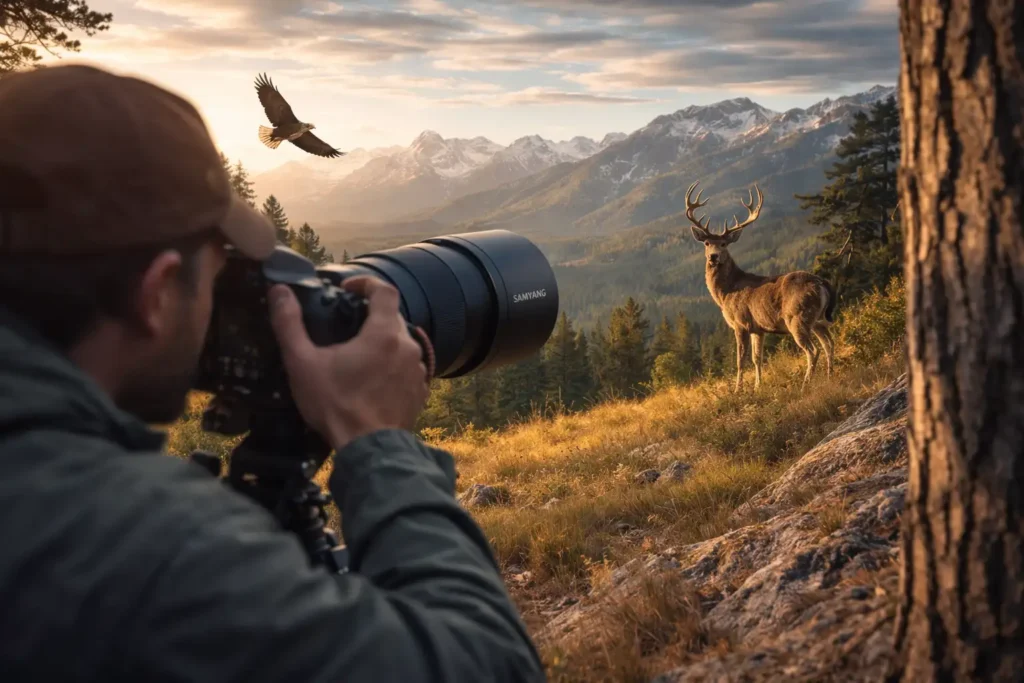
Getting close enough to skittish animals or flying birds requires telephoto reach, fast autofocus, and reliable image stabilization. If you are choosing the best telephoto lens for your camera system, here is where your money is best spent based on performance, weight, and mount compatibility:
Quick Recommendation Table
| Camera Mount | Top Wildlife Reach Pick | Best Value / Entry Pick | Versatile Low-Light Pick |
| Sony E-Mount | Sony FE 100-400mm f/4.5-5.6 GM OSS | Sony FE 100-400mm f/4.5-5.6 GM OSS | Sony FE 70-200mm f/2.8 GM OSS II |
| Fujifilm X-Mount | Fujifilm XF 100-400mm f/4.5-5.6 R LM OIS WR | Fujifilm XF 100-400mm f/4.5-5.6 R LM OIS WR | N/A (Check catalog) |
| Nikon (F & Z Mount) | Nikon AF-S NIKKOR 80-400mm f/4.5-5.6G ED VR (F-Mount / FTZ Adapter) | Nikon AF-S NIKKOR 80-400mm f/4.5-5.6G ED VR | NIKKOR Z 70-200mm f/2.8 VR S |
| Canon (EF & RF Mount) | Canon EF 70-300mm f/4-5.6 IS II USM (EF / Adapts to RF) | Canon EF 70-300mm f/4-5.6 IS II USM | Canon RF 70-200mm f/2.8 L IS USM |
How Much Reach Do You Really Need for Wildlife? (300mm vs 400mm vs 70-200mm)
Picking a telephoto zoom comes down to your primary subjects and how mobile you need to be in the field.
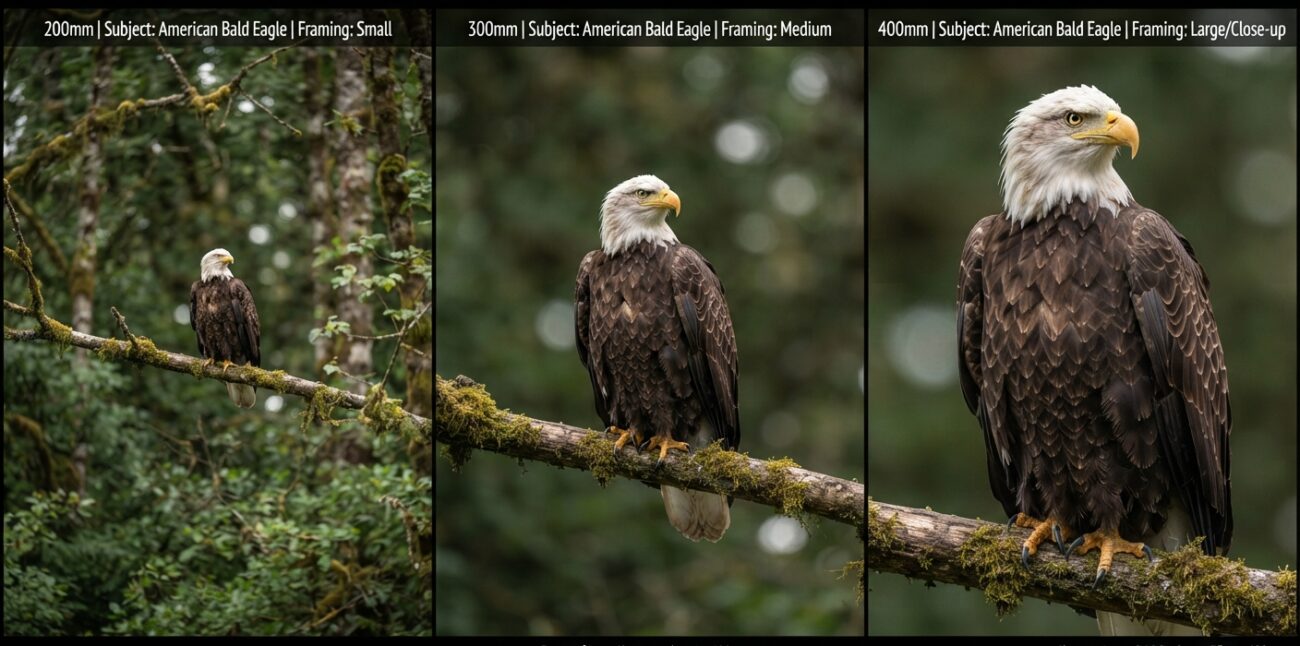
300mm to 400mm: The standard entry point for birding and skittish wildlife. A 400mm focal length lets you frame small birds or distant mammals cleanly without trespassing on their habitat or scaring them off.
70-200mm: Best for large animals (deer, horses, zoo settings), environmental wildlife shots, or shooting in deep forest canopies where fast f/2.8 light gathering matters more than maximum reach.
Crop Sensor Advantage: If you shoot an APS-C camera like Fujifilm X-series, a 100-400mm lens gives you a field of view equivalent to 150-600mm on full-frame without extra weight.
Best Sony E-Mount Telephoto Lenses for Wildlife
Sony FE 100-400mm f/4.5-5.6 GM OSS
Who it's for: Sony full-frame and crop-sensor shooters who need a dedicated, professional-grade reach for birds and distant wildlife.
Who should skip it: Shooters who only photograph pets or large zoo animals at close distance and want a lighter package.
The Sony FE 100-400mm GM is arguably the most versatile telephoto zoom in the E-mount ecosystem. Double linear motor and Direct Drive SSM systems keep AF fast and tracking predictable when birds break cover. Explore our full inventory of Sony lenses for additional telephoto gear.
Sony FE 70-200mm f/2.8 GM OSS II
Who it's for: Wildlife photographers working at dawn or dusk in dense woods where an f/2.8 maximum aperture is essential.
Who should skip it: Anyone focused strictly on small songbirds or long-range open-field tracking.
While 200mm is often short for small subjects, this lens takes teleconverters exceptionally well while preserving high autofocus tracking speeds on modern Alpha bodies.
Best Fujifilm X-Mount Telephoto Lenses for Wildlife
Fujifilm XF 100-400mm f/4.5-5.6 R LM OIS WR
Who it's for: Fuji shooters wanting super-telephoto reach (152-609mm full-frame equivalent) in a weather-sealed barrel.
Who should skip it: Casual travel photographers looking for a compact walkaround zoom.
This lens is built for harsh field conditions. With 5.0 stops of optical image stabilization, handheld shooting at 400mm (600mm equiv.) is surprisingly manageable without needing a monopod for every frame.
Best Nikon Telephoto Lenses for Wildlife
Nikon AF-S NIKKOR 80-400mm f/4.5-5.6G ED VR
Who it's for: Nikon DSLR owners and Z-series mirrorless users using the FTZ adapter who want 400mm focal range without buying exotic prime lenses.
Who should skip it: Shooters who insist on lightweight native mirrorless glass without using mount adapters.
A staple workhorse for Nikon FX DSLR shooters, this 80-400mm covers a massive range from environmental landscapes to distant wildlife. Check out our wide range of Nikon Z cameras and optics for full system choices.
NIKKOR Z 70-200mm f/2.8 VR S
Who it's for: Native Z-mount photographers shooting large game or working in low ambient forest light.
Who should skip it: Birders needing 400mm reach out of the box without adding teleconverters.
Nikon's S-Line optics deliver outstanding edge-to-edge sharpness and minimal color fringing, making feather and fur details stand out crisply even wide open at f/2.8.
Best Canon Telephoto Lenses for Wildlife
Canon EF 70-300mm f/4-5.6 IS II USM
Who it's for: Canon DSLR shooters and EOS R users (via EF-EOS R adapter) seeking an affordable, fast-focusing telephoto entry.
Who should skip it: Professional birders requiring weather-sealed L-series construction or 400mm+ reach.
Equipped with Nano USM technology, this lens focuses almost silently and extremely fast. It is one of the best budget-to-performance choices for entering wildlife photography. Browse our full selection of Canon RF lenses for mirrorless options.
Canon RF 70-200mm f/2.8 L IS USM
Who it's for: EOS R series photographers who prioritize a lightweight, compact footprint for tracking wildlife on long hikes.
Who should skip it: Photographers who plan to use teleconverters, as this specific RF design does not fit Canon RF extenders.
Note: For native Canon RF shooters needing 400mm or 500mm super-telephoto options (like the RF 100-500mm), we currently do not have those in stock, so adapting EF telephotos or utilizing the RF 70-200mm remain our top in-house recommendations.
Why a 70-200mm f/2.8 Lens Might Not Be Enough for Birds and Skittish Wildlife
Many photographers consider starting with a 70-200mm f/2.8 as their best wildlife lens, but it has distinct limitations compared to dedicated 100-400mm optics:
Distance Limitations: Small birds and skittish mammals rarely let you get within 15–20 feet. At 200mm, a small bird fills only a tiny fraction of a full-frame sensor, requiring heavy cropping that degrades image detail.
Teleconverter Trade-Offs: Adding a 2x teleconverter to a 70-200mm f/2.8 turns it into a 140-400mm f/5.6. While this gives you the reach, autofocus speed and optical sharpness generally drop slightly compared to a dedicated 100-400mm lens built for that focal range.
Frequently Asked Questions
Is 300mm enough for wildlife photography?
A 300mm focal length is sufficient for larger mammals (such as deer or safari wildlife) and close-range back-yard birding. However, for smaller birds and skittish subjects in open fields, 400mm or longer is recommended.
Is a prime or zoom lens better for wildlife photography?
Zoom telephotos (like 100-400mm) are generally better for most wildlife photographers because animals move unpredictably. A zoom allows you to reframe instantly without moving your feet or scaring the subject.
Do I need optical image stabilization (OIS / VR / IS) for wildlife?
Yes. When shooting at 300mm or 400mm, minor hand tremors are amplified significantly. Optical image stabilization helps keep your viewfinder steady and enables sharper handheld shots at lower shutter speeds.




 Film & Home Development