Blog

Best Portrait Lenses (by mount)

Best Portrait Lenses by Mount


If you want immediate background blur, sharp eyes, and flatter perspective for portraits, here is where your money is best spent based on your camera system:

Quick Recommendation Table

Camera Mount Top Prime Pick Top Zoom Pick Best Value / Indoor Choice
Sony E-Mount Sony FE 85mm f/1.4 GM II Sony FE 70-200mm f/2.8 GM OSS II Sony FE 50mm f/1.4 GM
Nikon Z-Mount NIKKOR Z 50mm f/1.8 S NIKKOR Z 70-200mm f/2.8 VR S NIKKOR Z 50mm f/1.8 S
Canon RF / EF Canon EF 85mm f/1.4L IS USM (EF / Adapts to RF) Canon RF 70-200mm f/2.8 L IS USM Canon EF 85mm f/1.4L IS USM

Prices subject to change. Check each product page for current price and live availability.

Quick Buyer’s Matrix: How to Choose Your Portrait Focal Length

Choosing the best portrait lens comes down to working distance, background blur, and lighting conditions.

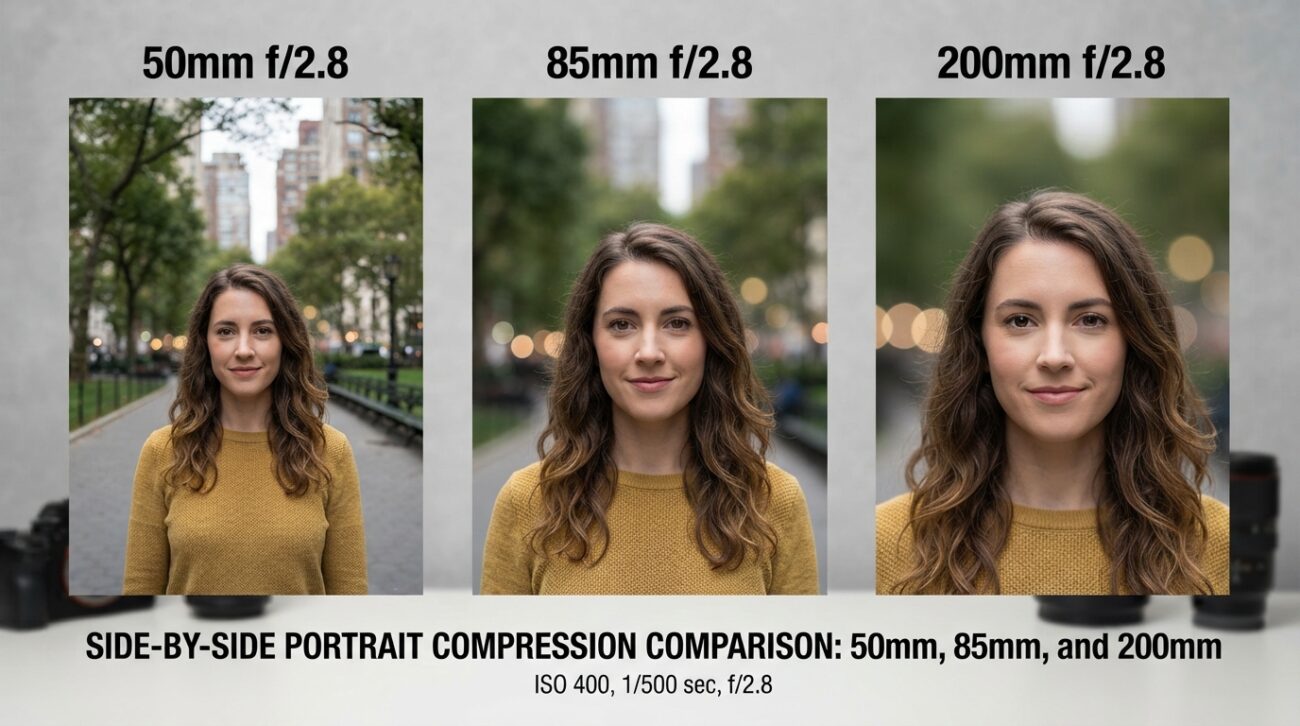
  • 50mm: Best for tight indoor venues, environmental portraits, and full-body shots. You work closer to your subject, which makes communication easy.
  • 85mm: The classic headshot and half-body standard. It provides noticeable compression without forcing you to stand across the room.
  • 70-200mm: Essential for events, weddings, and outdoor portraiture where you need instant reframing without stepping closer.


Best Sony E-Mount Portrait Lenses

Sony FE 85mm f/1.4 GM II

  • Who it's for: Portrait specialists, headshot photographers, and wedding pros needing maximum subject separation.

  • Who should skip it: Casual shooters or anyone working in tight home studios who lacks room to step back.

The Sony FE 85mm f/1.4 GM II delivers smooth background bokeh while keeping eyelashes and iris detail tack-sharp wide open. The linear XD autofocus motors drive focus quickly, keeping up with moving subjects during outdoor shoots.

[ADD HANDS-ON NOTE: Focus ring resistance and aperture ring click/de-click switch feel during rapid eye-tracking tests]

Sony FE 50mm f/1.4 GM

  • Who it's for: Photographers who need a versatile prime for indoor portraits, low-light events, and full-length shots.

  • Who should skip it: Shooters focused purely on tight headshots without background distractions.

If you shoot portraits in small rooms or dim indoor venues, this lens is easier to work with than an 85mm. It is lighter than its f/1.2 sibling while delivering clean optical performance across the frame. Check our full selection of Sony lenses for additional mounting options.

Sony FE 70-200mm f/2.8 GM OSS II

  • Who it's for: Event photographers, outdoor portrait shooters, and anyone needing framing flexibility.

  • Who should skip it: Budget-conscious buyers or photographers who want a light setup for casual walkaround portraits.

Sony significantly reduced weight on the Mark II version of this zoom. At 200mm and f/2.8, background compression isolates subjects remarkably well, making it a reliable choice for outdoor sessions.

Best Nikon Z-Mount Portrait Lenses

NIKKOR Z 50mm f/1.8 S

  • Who it's for: Photographers wanting sharp, flare-resistant optics without paying f/1.2 flagship prices.

  • Who should skip it: Photographers who demand the ultra-shallow depth of field that only an f/1.4 or f/1.2 optic creates.

This lens punches well above its price tier. Even wide open at f/1.8, chromatic aberration is well controlled, making it ideal for high-contrast portrait lighting. Explore our complete line of Nikon Z cameras and optics to complete your setup.

NIKKOR Z 70-200mm f/2.8 VR S

  • Who it's for: Working wedding and portrait shooters who require internal zoom stability and vibration reduction.

  • Who should skip it: Photographers who prefer discreet prime lenses for intimate candid work.

With built-in optical stabilization and multi-focus AF systems, this lens locks onto eyes quickly. It gives you the freedom to zoom seamlessly from waist-up framing to tight headshots.

Best Canon (RF & EF) Portrait Lenses

Canon RF 70-200mm f/2.8 L IS USM

  • Who it's for: Canon EOS R-system photographers who need an agile, compact telephoto zoom.

  • Who should skip it: Shooters who prefer internal zoom designs for heavy weather exposure or gimbal balancing.

Canon redesigned this RF lens with an extending zoom mechanism, making it noticeably shorter in a camera bag than traditional 70-200mm optics. Focus acquisition speed with Dual Nano USM motors is instant, making it an excellent choice for dynamic portrait work. Browse our range of Canon RF lenses for additional mirrorless options.

Canon EF 85mm f/1.4L IS USM

  • Who it's for: Canon DSLR owners and EOS R mirrorless users using the Mount Adapter EF-EOS R.

  • Who should skip it: Native RF mirrorless purists who prefer adapter-free setups.

This remains one of Canon's finest DSLR portrait designs. Unlike older f/1.2 versions, this model features built-in image stabilization, helping you capture sharp handheld shots at slower shutter speeds.

Note: For Fujifilm X-mount, Leica L-mount, or Micro Four Thirds shooters, we currently do not carry native portrait glass in stock, but standard 50mm and 85mm full-frame equivalents apply.

Prime Lens vs Zoom Lens for Portraits: Which Do You Need?

Choosing between the best prime lens options and a fast telephoto zoom comes down to location and lighting control.

  • Subject Isolation: Fast primes opening to f/1.4 or f/1.8 create softer background blur than f/2.8 zooms when shooting at equivalent distances.

  • Framing Speed: A 70-200mm f/2.8 allows you to adjust composition without changing position. This is ideal during ceremonies, live events, or active children's shoots.

  • Weight & Size: A 50mm or 85mm prime reduces physical weight on long shoot days compared to a 3-pound telephoto zoom.

Shooting Indoors: Best Lens for Low Light Indoor Photography

Indoor spaces like living rooms, reception venues, and dim studios present lighting challenges. When artificial light is low, wide-aperture primes excel:

  1. Light Gathering: An f/1.4 lens lets in four times as much light as an f/2.8 zoom. This allows you to keep ISO lower and shutter speeds fast enough to prevent motion blur.

  2. Working Distance: In tight indoor spaces, an 85mm lens often forces your back against the wall. A fast 50mm f/1.4 or f/1.8 lens gives you comfortable framing room while gathering maximum light.

Frequently Asked Questions

Is 50mm or 85mm better for portraits?

An 85mm lens offers superior facial proportion accuracy and background separation for headshots and half-body images. A 50mm lens is better suited for full-body shots, small studio spaces, and environmental portraits where you need to include background context.

Why use a prime lens instead of a zoom for portraits?

Prime lenses offer wider maximum apertures (f/1.4 or f/1.8) than standard zooms (f/2.8). This extra light gathering capability provides smoother background separation and better performance in low-light environments.

Can you shoot professional portraits with an f/1.8 lens?

Yes. Modern f/1.8 lenses, such as the NIKKOR Z 50mm f/1.8 S, deliver sharp resolution and pleasing bokeh wide open. The optical difference between f/1.8 and f/1.4 is subtle in real-world portraiture.

Leave a Reply

Your email address will not be published. Required fields are marked *