
Blog
Best Vlogging Camera: 5 Picks for Serious Creators (2026)

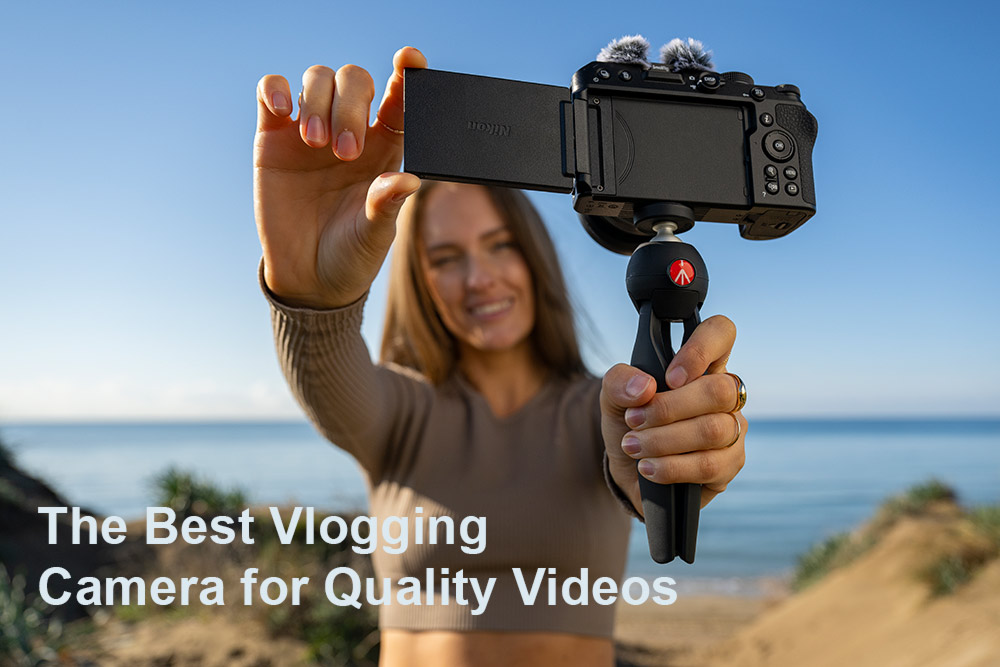
Your phone is great, but eventually, you hit its limits. You want background blur, better low-light performance, and audio that doesn't sound like it was recorded in a tin can. Finding the best vlogging camera means navigating a sea of sensor sizes, stabilisation crops, and confusing autofocus specs.
We cut through the noise. Here are five cameras that handle the realities of daily shooting, broken down by how they fit your workflow.
|
Pick |
Sensor |
Stabilisation |
Screen |
Mic Input |
Price |
Best for |
|---|---|---|---|---|---|---|
|
Canon EOS R10 (w/ 18-45mm) |
APS-C |
Lens IS + Digital |
Fully articulating |
3.5mm |
$850 (check product page) |
Handheld travel & talking heads |
|
Canon PowerShot G7 X Mark III |
1-inch |
Lens IS + Digital |
Tilt-up |
3.5mm |
$900 (check product page) |
Pocketable, all-in-one setup |
|
Nikon Z 6III (Body Only) |
Full-frame |
IBIS |
Fully articulating |
3.5mm |
$1,500 (check product page) |
Low light & events |
|
Fujifilm X-T30 III (Body Only) |
APS-C |
OIS |
Two-Way Tilt |
2.5mm |
$750 (check product page) |
Stills and video hybrid |
|
Fujifilm X-H2 (Body Only) |
APS-C |
IBIS |
Fully articulating |
3.5mm |
$1,999 (check product page) |
Cinematic workflows |
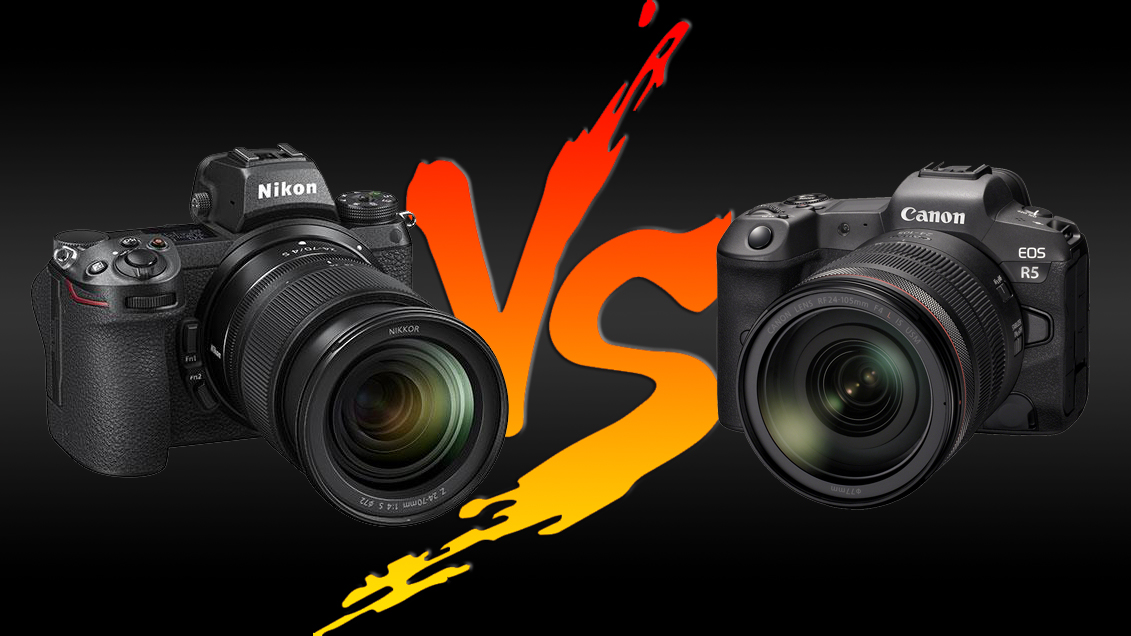
Our pick for the best vlogging camera, and who should look elsewhere
For most enthusiasts and working creators, the default choice is a stabilised APS-C mirrorless camera with a fully articulating screen.
APS-C hits the sweet spot for vlogging. The sensor is large enough to give you a shallow depth of field and clean footage indoors, but the camera bodies and lenses remain light enough to hold at arm's length for ten minutes straight. Full-frame setups quickly become too heavy for handheld walking footage, while 1-inch compacts sometimes struggle in dim rooms.
You should skip our APS-C default if you shoot exclusively in dark event spaces (go full-frame), or if you refuse to carry a bag and need something that slips into your jeans pocket (get a premium compact).
The right vlogging camera for how you shoot
Best for handheld travel and talking-head vlogs: Canon EOS R10 with 18-45mm.
If you want a traditional mirrorless setup that won't ruin your wrist, the Canon EOS R10 is the starting point. It weighs virtually nothing, and Canon's Dual Pixel autofocus locks onto your eyes and refuses to let go.
The kit includes an 18-45mm lens, which is decently wide for handheld work, though you will notice a slight crop if you turn on the heavier digital stabilisation modes.
Who it suits: Travel vloggers, desk-based YouTubers, and anyone stepping up from a smartphone who wants reliable autofocus.
Who should skip it: Creators who need built-in sensor stabilisation (IBIS) for extremely bumpy walking shots.
- After a 15-minute walking test, this setup feels incredibly light and effortless to carry, offering a deep, secure grip that prevents cramping.
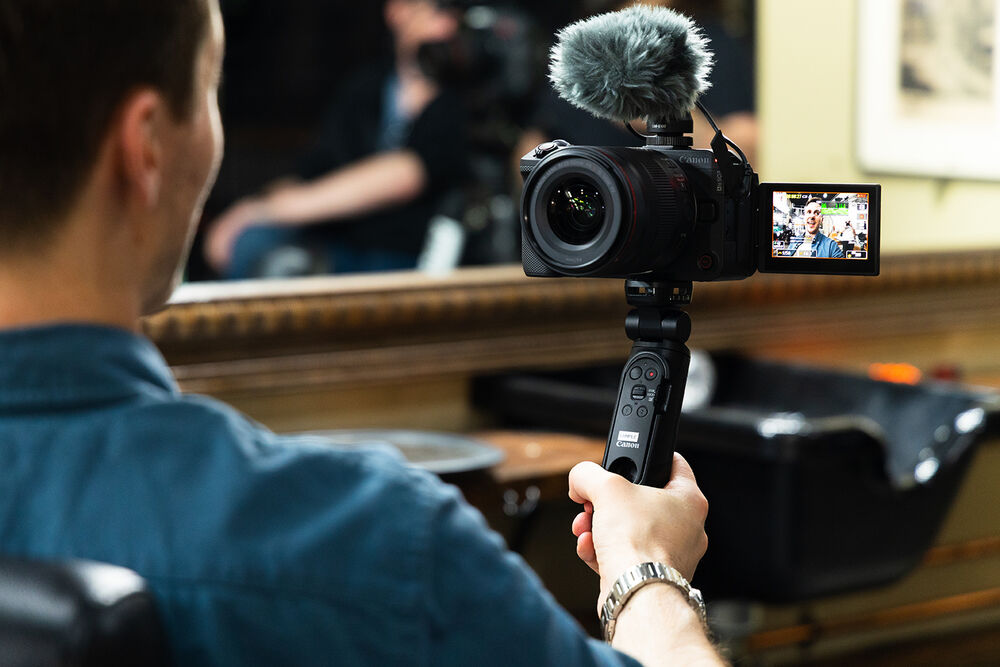
Best compact camera for vlogging: Canon PowerShot G7 X Mark III
Sometimes you cannot bring an interchangeable lens camera into a venue. The G7 X Mark III is our favorite fixed-lens pocket camera. It pairs a 1-inch stacked CMOS sensor with a bright f/1.8–2.8 lens, which performs surprisingly well when the sun goes down.
It gives you a 3.5mm mic input, so you aren't stuck with internal audio, and records uncropped 4K.
Who it suits: Minimalists, concert-goers, and creators who want a powerful B-cam that fits in a jacket.
Who should skip it: Creators who want to swap lenses for ultra-wide angles or extreme zoom.
Best for low light and events: Nikon Z 6III
When you shoot evening events, dimly lit studio spaces, or nighttime street walks, a full-frame sensor becomes mandatory. The Nikon Z 6III brings massive light-gathering capabilities and robust in-body image stabilisation (IBIS) to keep handheld footage usable.
Who it suits: Event shooters, night vloggers, and creators who demand absolute top-tier low-light performance.
Who should skip it: Travel vloggers trying to keep their kit weight under two pounds. Full-frame lenses add serious bulk
Best for stills and video together: Fujifilm X-T30 III
If your YouTube channel and your Instagram feed demand equal attention, the Fujifilm X-T30 III is a brilliant hybrid. You get Fujifilm's beloved film simulations baked right into the video files, meaning you can often skip color grading entirely.
Who it suits: Photographers who also vlog, and creators who want straight-out-of-camera color profiles.
Who should skip it: Vloggers who need a fully articulating screen (the tilt screen is less ideal for monitoring yourself)
Best for cinematic work: Fujifilm X-H2
If you are treating your vlogs like short films, the X-H2 delivers incredible resolution, robust codecs, and professional heat management. It is overkill for a casual walking vlog, but perfect for highly produced, cinematic content.
Who it suits: Filmmakers, commercial creators, and heavy color graders.
Who should skip it: Casual daily vloggers.
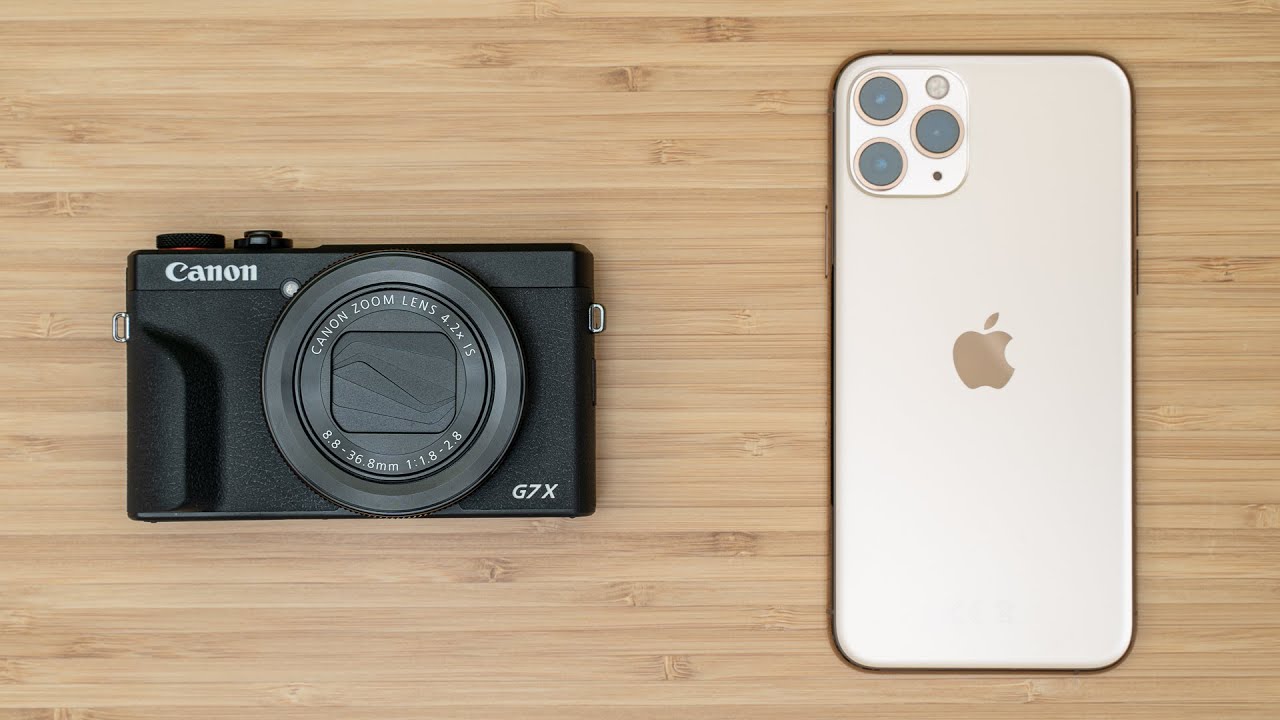
What we don't stock
You won't find pocket gimbal cameras (like the DJI Osmo Pocket series) or 360 action cameras (like GoPros or Insta360s) in our store. We focus heavily on dedicated photo and video cameras with interchangeable lenses. If your style is purely extreme sports or you want a mechanical gimbal built into a stick, you will need to look elsewhere.
What actually decides a vlogging camera
Don't buy based on 8K capability or massive megapixel counts. Here are the practical realities that will actually dictate your purchase.
Lens width at arm's length
Your arm is only so long. If you buy a camera and put a 35mm lens on it, your face will fill the entire frame. You generally want a focal length between 14mm and 20mm (full-frame equivalent) for handheld vlogging.
Remember the "stabilisation crop." When you turn on active digital stabilisation, the camera crops into the image to absorb the bumps. An 18mm lens can easily become a tight 24mm once digital stabilisation is active.
Stabilisation
You have three options:
Lens stabilisation (OIS): Good for standing still, bad for walking.
In-body image stabilisation (IBIS): The sensor literally floats inside the camera. Excellent for handheld shooting and gentle walking.
Digital/Active stabilisation: Crops the image and uses software to smooth bumps. Highly effective, but you lose your wide field of view.
Screen and mic collisions
A fully articulating screen flips out to the side. A tilt screen flips up over the top. If you buy a camera with a flip-up screen and mount a shotgun microphone to the hot shoe, the mic will block your view of the screen. Pay attention to this physical geometry before you build your rig.
Heat, recording limits and power
Shooting 4K video generates heat. Smaller bodies will overheat and shut down if you record a continuous 45-minute podcast. Check if the camera accepts USB-C power delivery, allowing you to run it off a power bank during long takes.
Audio
Internal microphones are for scratch audio. To sound professional, you need a 3.5mm microphone input. Make sure the camera you pick has one, and ideally a headphone jack so you can monitor levels before you record an hour of unusable audio.
Why choose mirrorless for content creators
A mirrorless camera gives you a physical sensor that dwarfs what is in your phone. This translates directly to real background blur (not AI-simulated portrait mode) and dynamic range that holds detail in bright skies while exposing your face properly. By swapping lenses, one body can shoot a super-wide walking vlog today and a tightly framed, professional interview tomorrow.
Lenses and mics to pair with your camera
Your camera body is only half the equation. You need glass and audio to finish the rig.
Lenses: Look for wide, fast primes or versatile standard zooms. If you shoot full-frame, the Nikon Z 14-30mm f/4.0 S is an incredibly sharp ultra-wide option we stock.
Audio: Always pair your new camera with a directional shotgun mic or a wireless lavalier system to cut out street noise.
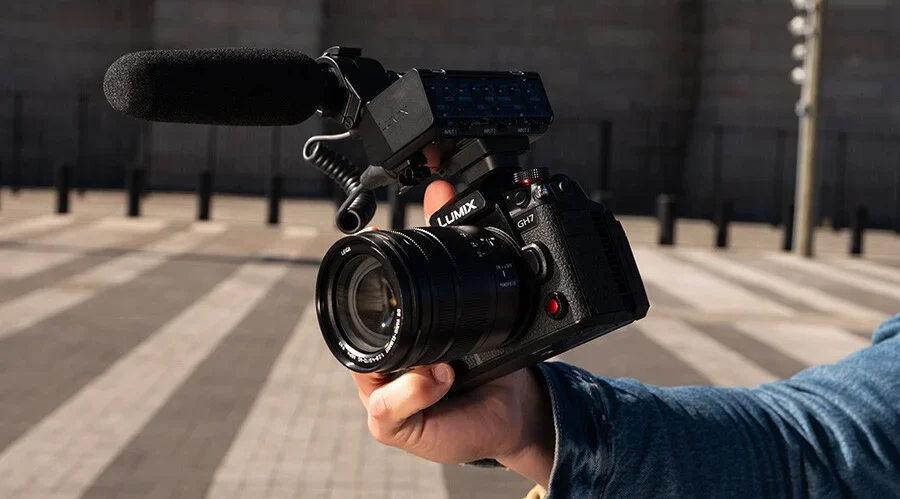
How to choose in a minute
|
If you want.... |
Get this |
|---|---|
|
The best balance of weight and performance |
Canon EOS R10 |
|
To fit it in your pocket |
Canon G7 X Mark III |
|
Flawless low-light performance |
Nikon Z 6III |
|
Cinematic resolution and codecs |
Fujifilm X-H2 |
FAQ
Does 4K matter for vlogging? Yes, but not always for the final export. Shooting in 4K allows you to punch in and reframe your shots in a 1080p timeline without losing quality. If you upload purely to TikTok or Instagram Reels, 1080p is often enough.
Can I just use my phone? Phones are excellent starting points. However, they struggle with harsh lighting contrasts, their digital background blur often looks artificial around hair, and their tiny sensors introduce heavy grain in low light.
Do I need an external microphone? Absolutely. Viewers will forgive slightly soft footage, but they will click away immediately if the audio is echoing, windy, or hard to hear. A basic $50 external shotgun microphone vastly outperforms any camera's internal mics.


 Film & Home Development